



Some headphones have music. It is played back to you by the proper people.
There’s a moment that takes you by surprise. You’ve known a song for years, but all of a sudden it sounds different. Not more loudly. Not tidier. It was simply alive in a way that had never existed before. Like a slow exhalation, the bass sinks into your chest.
The singer seems to have pulled up a chair because the vocals are so close, almost uncomfortable. And you hear a small sound you’ve never heard before somewhere in the middle of a tune you’ve passed a hundred times.
That isn’t an improvement. It’s a revelation.
For this reason, purchasing the incorrect pair hurts more than most people realize and how to choose headphones become more important.
The options grow rapidly when you enter any store or begin browsing the internet. Deeper bass, smarter silence, a longer battery life, and sound so accurate that your old setup will seem like a crime are all promised in every package. The terminology becomes technical.
This guide ignores all of such chatter.
This is neither a rating of goods that no one asked about, nor is it a list of technical words. Whether you’re looking for headphones for a long flight, a late work session, an early commute, or those quiet times when music is your sole companion, this article offers a realistic and honest look at how to discover headphones that truly fit your listening style.
By the time you’re done reading, the decision will seem less like a risk and more like something you already knew.
Key Takeaways
- Start by identifying where and how you will use your headphones most often.
- Choose the right type: over-ear for immersive sound, on-ear for balance, and in-ear for portability.
- Closed-back headphones isolate sound, while open-back models create a wider, more natural soundstage.
- Decide between wireless convenience or wired audio quality depending on your needs.
- Features like noise cancellation, comfort, and key specs help determine overall listening performance.
How to Choose the Right Headphones? (Quick Checklist)
Consider these five crucial questions if you’re searching for quick solutions:
- Where are you going to use them the most? Are you going to the gym, lounging at home, or riding a noisy train?
- Which source is your main source? Will you be using a laptop, a high-end hi-fi system, or a smartphone to listen?
- Is it necessary to shut off the outside world? Determine whether passive isolation is sufficient or if Active Noise Cancellation (ANC) is required.
- How much time do you spend listening? Take into account your needs for long-term physical comfort and battery life.
- What is your budget that cannot be negotiated? Establish your budget, from low-cost deals to high-end expenditures for audiophiles.
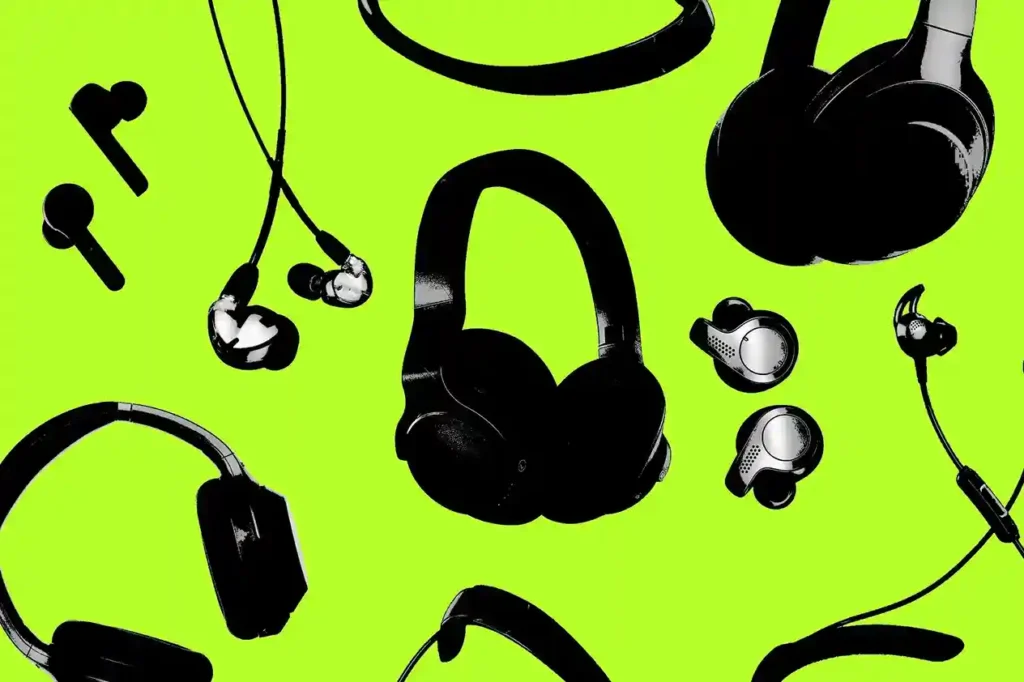
Step 1: Choosing Your Style
The first step is deciding on the physical form factor. There are three primary styles, each offering a different relationship between the sound and your ears.
- Over-Ear (Circumaural): In the domain of audio, they are the conductor’s seat. They have big cups that completely enclose the ear. The most immersive soundstage is usually provided by this configuration. While professional standards like Beyerdynamic use soft velour earcups for optimal comfort during extended sessions, premium models frequently use luxurious materials like lambskin and memory foam.
- On-Ear (Supra-aural): These fit right on the outer ear and are a portable compromise. They can occasionally exert a vice-grip pressure that gets uncomfortable or eventually results in on-ear heat, but they are lighter and less cumbersome than over-ears.
- In-Ear (Earbuds/IEMs): These are located right inside the ear canal. Because they function like a real earplug, they provide superior passive isolation and are unmatched for sports and portability.

Apart from the styles discussed here, there are several other variations worth exploring. Here is a detailed list of types of headphones that explains how each design differs in comfort, portability, and sound delivery.
| Feature | Over-Ear | On-Ear | In-Ear |
| Sound Quality | Excellent | Good | Good to Excellent |
| Portability | Low (Bulky) | Medium | High (Pocketable) |
| Comfort | High | Medium | Medium (Fit dependent) |
| Battery Life | 30 to 100 hours | Up to 76 hours | 8 to 24 hours |
| Ideal Use Case | Home/Studio | Office/Commute | Fitness/Travel |
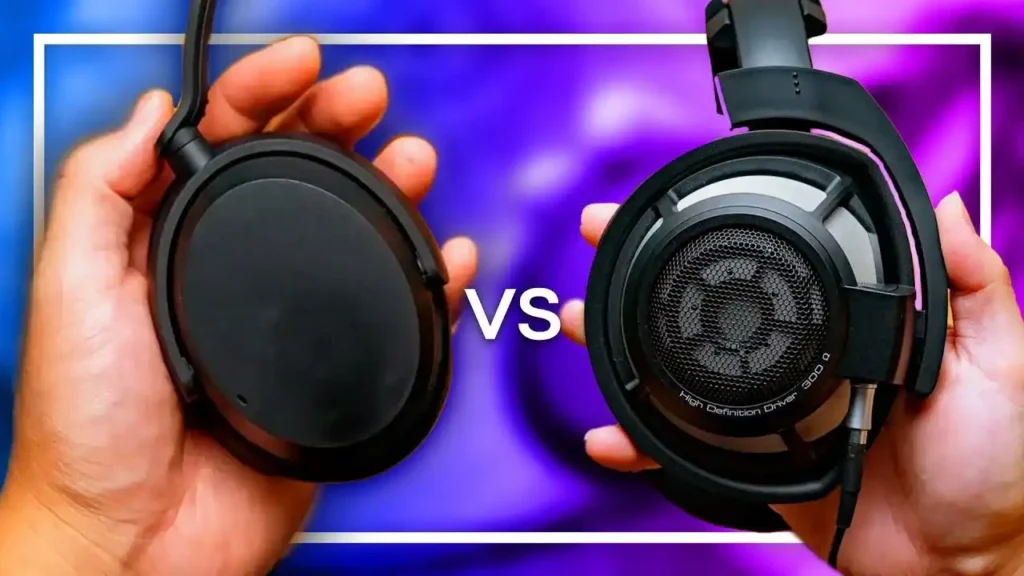
Step 2: The Soundstage Debate (Open-Back vs. Closed-Back)
A single design feature can significantly influence the audio quality of your music when choosing between over-ear and on-ear headphones. The earcups can either be open or sealed, with each design creating a uniquely different sound.
Sealed earcups in closed-back headphones contain sound within your ears. This design prevents most of the audio from leaking out, leading to an immersive and focused listening experience. As a result, they are ideal for travel, workplaces, or any public space where you wish to avoid disturbing others with your music.
The earcups of open-back headphones feature vents that enable sound and air to pass through. This design results in a broader and more natural soundstage, allowing music to feel more expansive and realistic. However, the downside is that sound leaks out easily, which means that others nearby can hear what you’re playing.
Step 3: Wired vs. Wireless and the Codec Mystery
When deciding how to choose headphones, one of the biggest decisions is whether you want wireless and wired headphones, since each connection type affects convenience, sound quality, and everyday usability.
- Wireless: This offers complete freedom of movement. Modern 2026 models like the Sonos Ace and Bose QuietComfort Ultra now support Lossless audio over a USB-C connection, providing a middle ground for those who want both.
- Wired: This remains the gold standard for serious musicians and audiophiles. A wired connection provides zero latency and consistent, high-fidelity quality without the need for a battery.
The 2026 Dongle Revolution. If you choose Bluetooth, the codec determines how audio is sent. Owners of iPhones were previously compelled to utilize the subpar AAC codec.
However, the Sennheiser HDB 630 is a big shift. This model includes a unique USB-C adapter that allows iPhones to use the high-resolution aptX Adaptive codec, providing mobile users with audiophile quality. Android users should keep looking for LDAC for the best wireless bitrates.
Step 4: Understanding Active Noise Cancellation (ANC)
One technical way to reduce background noise is through active noise cancellation. It successfully cancels out undesirable noise by using tiny inside microphones to detect outside sounds and then producing an opposite soundwave through a process known as destructive interference.
The market is clearly divided in 2026. The undisputed king of silence is the Bose QuietComfort Ultra (2nd Gen). Its “Quiet Mode” creates a cocoon of silence that blocks out the mid-band cacophony of bustling workplaces and the deepest rumbles of airplane engines.
Despite their superior noise reduction capabilities, Sony flagships are frequently regarded as the “musicality kings” due to their dynamic sound. Never forget the distinction between passive (material-based) and active (electronics-based) noise canceling.
According to Research Studies, active noise cancellation can significantly reduce low-frequency noise such as aircraft engines and train rumble.
Step 5: Decoding the Specs
Technical specifications can be confusing, but they are easy to understand when translated into human terms:
- Frequency Response: This refers to the spectrum of sound that headphones can reproduce, ranging from deep, resonant bass to bright, sharp treble.
- Impedance: This indicates the electrical resistance. While some classic studio models like the DT 770 PRO (250 ohm) need a dedicated amplifier, many flagship models from 2026, such as the Beyerdynamic T1 (3rd Gen), have reduced their impedance to 32 ohms, making them much simpler to use with a regular smartphone or laptop.
- Drivers: Consider these as the power source of the headphones. Larger drivers can displace more air, often resulting in a more impactful sound.
- Sensitivity: This indicates how loud the headphones will play at a given power level.
If you want a deeper breakdown of the most important technical details, check out our guide on the Top 15 specs you should know before buying headphones.
Situational Guidance: Matching Headphones to Your Life
Not all headphones were designed with the same user in mind. The best option is determined more by how you really spend your time than by specifications.Your passion is music: In addition to an over-ear design intended for extended sessions, look for a balanced frequency response that allows each layer of a track to breathe.
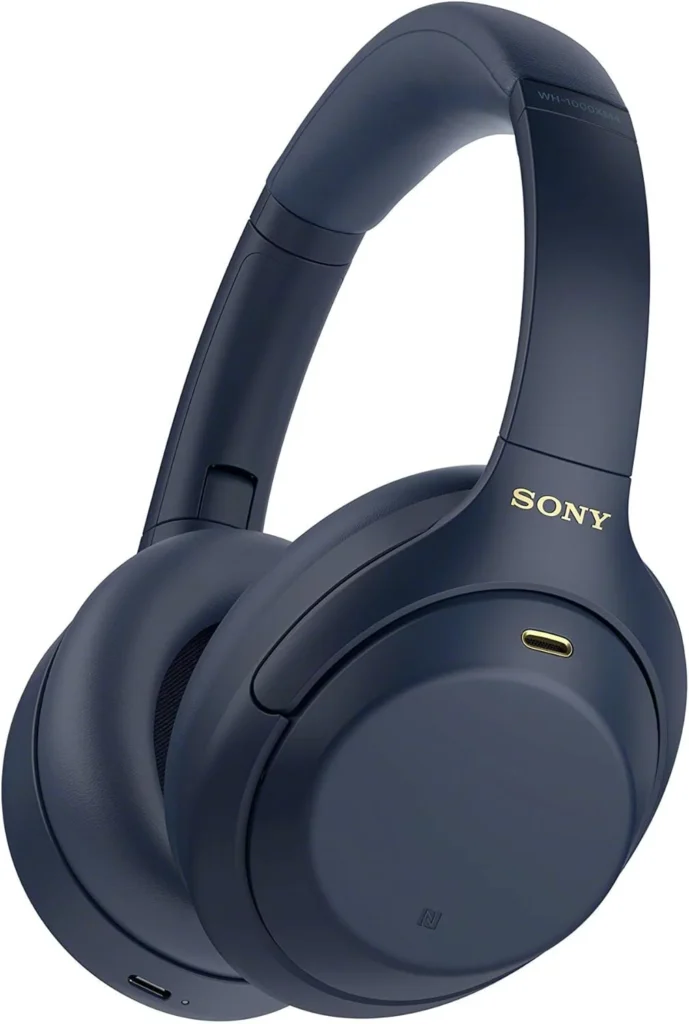
The Sony WH-1000XM6 is a portable, foldable device that produces rich, textured sound.
You’re constantly moving: Your tranquility can be stolen by busy commutes, trains, and airplanes. That is reversed by powerful active noise suppression. Travelers have come to trust the Bose QuietComfort Ultra for effortlessly transforming turmoil into tranquility.
You put in a Lot of Training: Exercise is difficult on the equipment. A solid fit ensures that nothing moves while you’re distracted, and an IP57 rating provides genuine protection against perspiration and dust.
You Do Work from Home: Microphone clarity is crucial over hours of consecutive calls. This is well handled by the boAt Rockerz 650 Pro, which uses two AI-powered microphones to filter out background noise and preserve your speech.
The Game You Play: Sound is information in competitive gaming. A dedicated boom microphone keeps team communication sharp when it matters most, and surround sound allows you to hear subtleties others miss.
Common Mistakes to Avoid When Buying
- Ignoring the Fit: Sound quality matters, but if the headphones hurt your ears or cause headphones dent, you probably need to rethink the design and padding.
- Chasing Features You Won’t Use: Do not pay a premium for high-end ANC if you only listen in a quiet home office where passive isolation is enough.
- Forgetting about Codec Compatibility: Buying LDAC headphones is a waste if you use an iPhone without a specialized dongle like the one provided with the Sennheiser HDB 630.
- Ignoring Battery Health: Tiny earbud batteries have a finite lifespan. Most will begin to degrade after about three years of constant charge-deplete cycles.
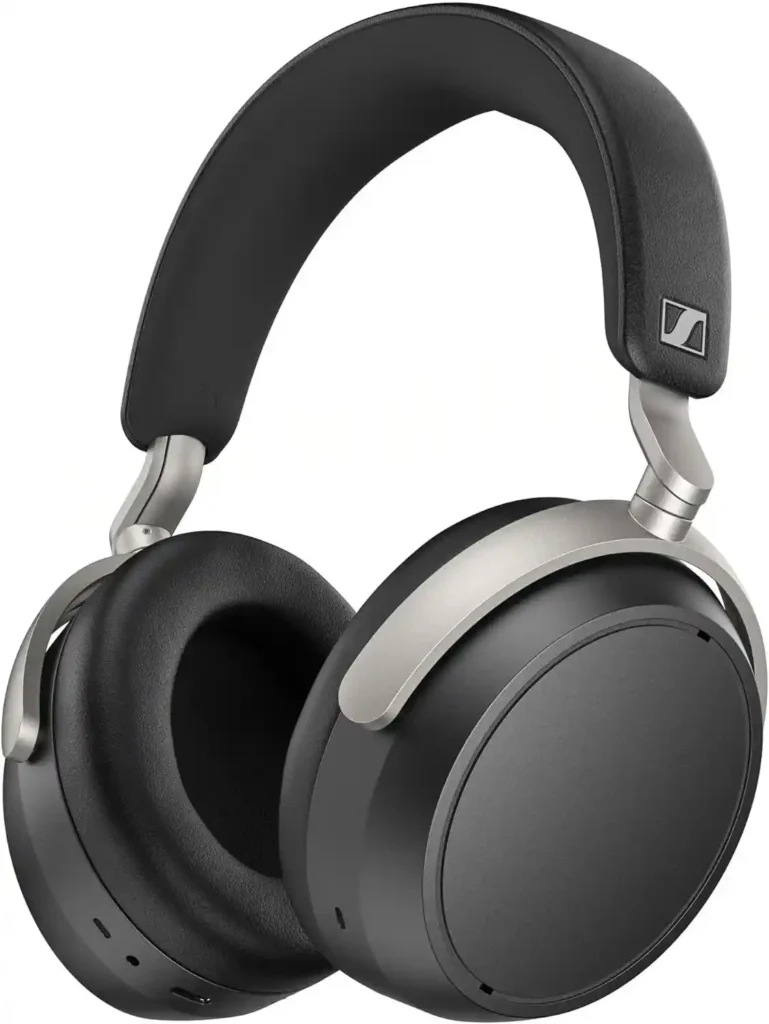
Source: Sennheiser HDB 630 Hi-Res Wireless Headphones
The 5-Step Beginner-Friendly Buying Guide
If you are ready to buy, follow this simple workflow:
- Identify your primary environment: Where will you spend 80 percent of your listening time?
- Pick your form factor: Decide between the portability of in-ears or the immersion of over-ears.
- Decide on a connection: Choose wired for the highest quality or wireless for a modern, cable-free lifestyle.
- Check for must-have features: Do you need an IP57 rating for the gym, or Multipoint Bluetooth to connect to two devices at once?
- Try before you buy: Always check the fit and verify the return policy. Fit is subjective, and what feels like lambskin luxury to one person might feel bulky to another.
Conclusion
The most costly headphones are not always the best. They don’t have the most buzzwords on the box or the longest specification sheet. They are the ones you aim for without hesitation each and every day.
Your mood can be subtly influenced by sound. An exhausting shift might become something you look forward to with the perfect pair. It can help you get more out of a workout, immerse yourself in late-night music, or just make the hours seem lighter.
Therefore, consider your life before making a purchase. Where are you listening? For what duration do you wear them? What does it feel like to you to listen well? No review or ranking will ever be as important as those responses.
The journey of modern headphones actually began more than a century ago when engineer Nathaniel Baldwin built the first pair at his kitchen table in 1910. If you’re curious about how audio gear evolved from that moment, explore the full history of headphones.
The best decision is always personal, whether you choose a little, everyday device like the Sennheiser HD 560S or something like the Jabra Elite 85h. Whatever you are listening to feels worthwhile because of the couple.Need help choosing the perfect speakers? Whether you’re setting them up at home or outdoors, we’ve got you covered. Don’t forget to check out our “blogs” for more tips!
FAQs
1) How do I choose the right headphones for music?
Focus on over-ear designs that offer a neutral frequency response. This ensures you hear the music exactly as the producer intended without artificial boosts.
2) Are wireless headphones as good as wired ones?
Modern 2026 Bluetooth technology is almost indistinguishable from wired connections for most listeners. However, wired remains the king for audiophiles who demand zero latency and maximum detail.
3) How important is noise cancelling when choosing headphones?
It is essential if you spend a lot of time on planes, trains, or in busy offices. If you primarily listen in quiet spaces, you can save money by choosing headphones with good passive isolation instead.
4) What specs matter most when buying headphones?
Frequency response is important for understanding the range of sound. Impedance is also critical to ensure the headphones are compatible with your device, such as a phone versus a professional amplifier. Look for 32-ohm models for the best mobile compatibility.