A record can survive a hotel room. It cannot survive a chain you cannot repeat. The difference between a productive trip and three weeks of lost work is usually not the room, the view or the coffee; it is whether the same signal path works every time you open the laptop.
Pack for the room you will get, not the one you want
The temptation is to bring the studio. The useful approach is to bring one chain you can set up in four minutes and trust.
- One interface. Two inputs is enough for a vocal, a guitar or a DI. It should be bus-powered and small enough to fit in a laptop sleeve.
- One microphone. A cardioid condenser or a dynamic you already know. Bring the shock mount and the cable you have used a hundred times, not the new one.
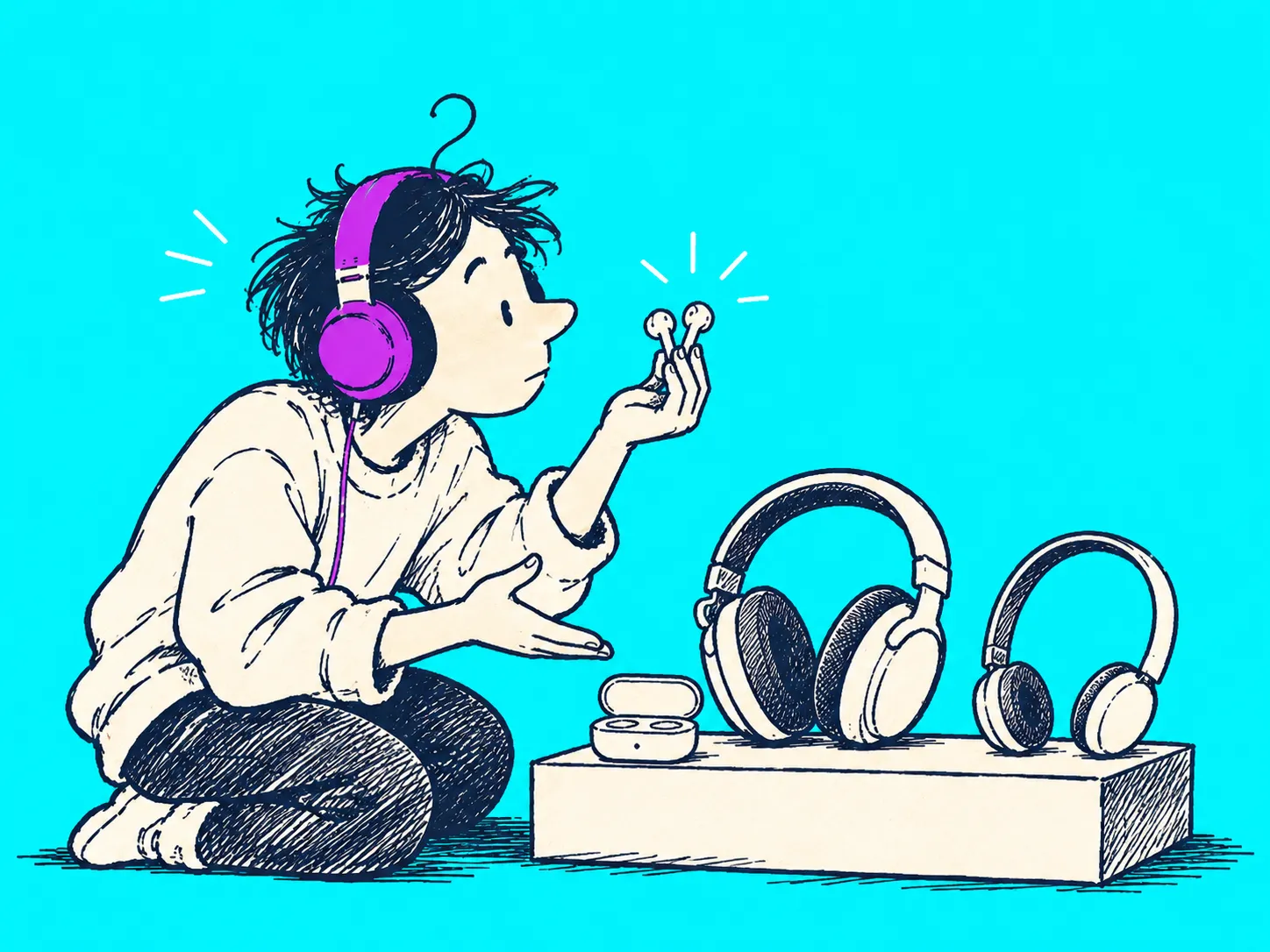
- Closed-back headphones. You will be tracking in rooms with other people in them, and you will check mixes on a laptop speaker at some point. Closed backs keep the click out of the mic and keep the session private.
- Cables you can replace. One spare USB cable and one spare XLR cost almost nothing and end most bad days.
- A second screen, if you edit to picture or mix against meters. A portable monitor earns its weight when the laptop screen is showing the timeline and the reference is somewhere else.
If you are building the home version of the same chain, our guide to setting up a home recording studio walks through the order that matters: room, interface, monitoring, then everything else.
The hotel room is the worst room
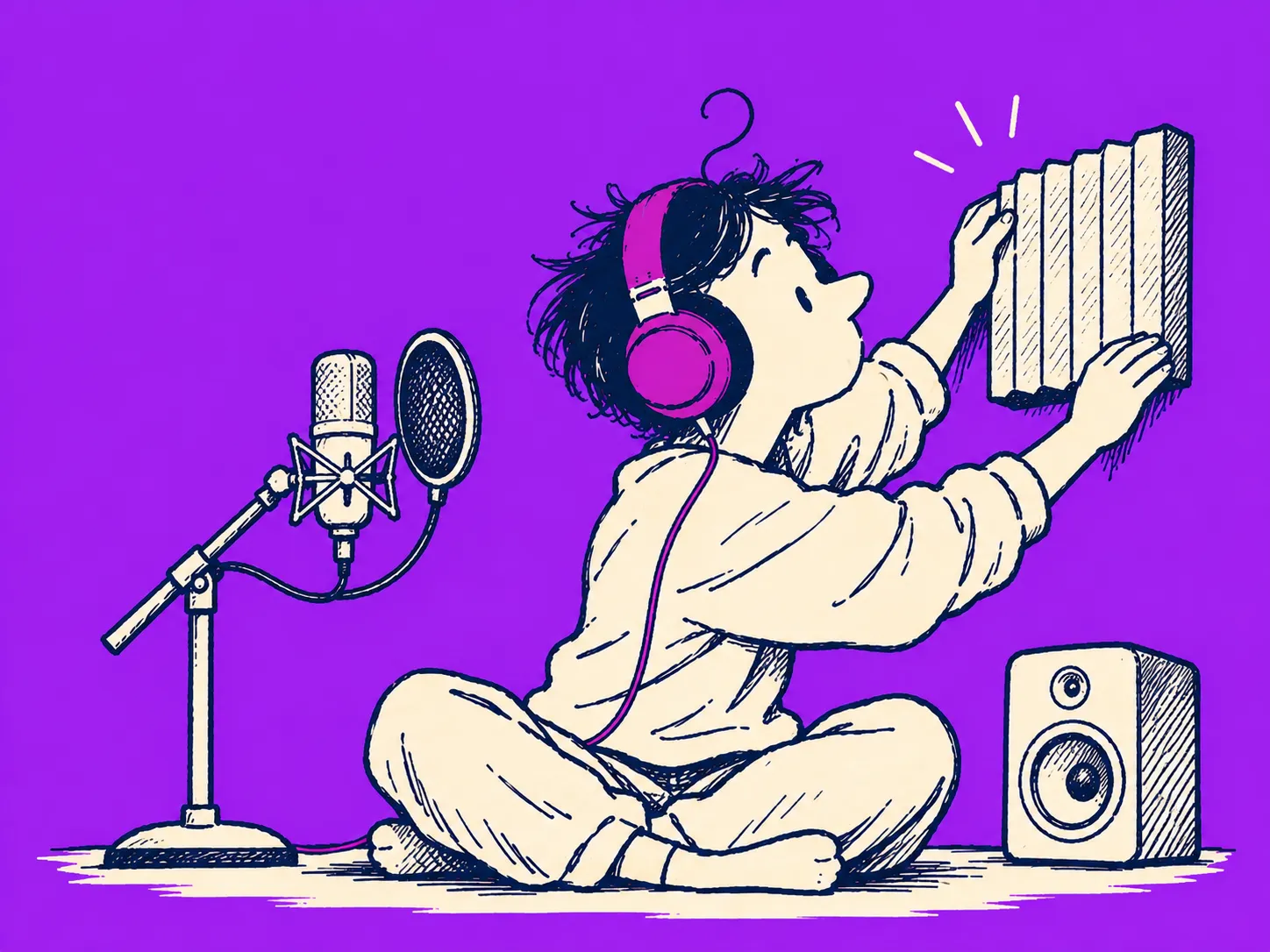
Parallel walls, a window onto a road, an air-conditioning unit that cycles on every four minutes and a wardrobe that is the only soft surface in the room. You are not going to fix the acoustics. You can stop them from ruining a take.
- Record close. A mic 10 to 15 cm from the source picks up less room.
- Use the bed, the curtain and the wardrobe. Hang a coat behind the singer, or track under a duvet if the part allows it.
- Track DI and reamp later. A clean DI is portable; a committed amp tone in a bad room is not.
- Kill the HVAC while you record and put it back on between takes. A four-minute cycle will land in the middle of your best pass.
The room will still be audible. That is fine. A little room is not a defect; a room you did not notice until the mix is.
If the room defeats you, a coworking space nearby is usually quieter and cheaper than upgrading the room.
Latency is a geography problem
Every remote collaboration hits the same wall: the speed of light and the speed of the internet. A round trip between two continents adds tens to hundreds of milliseconds before the audio has even been processed. That is enough to make playing together feel wrong, and no interface fixes it.
So do not try to jam in real time across an ocean. Work in passes:
- Send stems, not a live feed.
- Record your part against the reference, bounce it, send it back.
- Use the metronome to keep takes aligned if the other person is working without a click.
- Keep a shared notes file with tempo, key, sample rate and the name of the take that is actually the good one.
Files, not sessions
The session file is the most fragile thing you will carry. Plugins on your laptop may not exist on the other machine, and a project that depends on one specific reverb is a project that opens in one place.
- Consolidate and export stems at the session's sample rate.
- Name takes by date and version, not by mood.
- Keep a dry vocal and a dry DI in every delivery.
- Store the work in two places before you sleep. A laptop and a phone is not a backup.
If you need to capture a quick idea without opening a DAW, the browser audio recorder gets a scratch take down in one click.
A week-one checklist
- Test the full chain before you leave: mic, interface, headphones, DAW, one recording.
- Record a thirty-second reference of your own voice or instrument so you can compare rooms.
- Check the headphone fit and seal; a bad seal changes the low end and every mix decision after it.
- Download the plugins you need and authorize them while you still have reliable Wi-Fi.
- Put a copy of the session and the stems in cloud storage before the first flight.
The record does not care where you are. It cares whether the chain is repeatable, whether the takes are named, and whether the files exist in two places. Get those three things right and the room stops being the story.