



Weeks of research. Seventeen browser tabs. Three Reddit threads where strangers argued passionately about frequency response curves at two in the morning. You landed on a pair, pulled the trigger, spent real money, and waited.
The box arrives. You open it slowly, the way you do with things that cost that much. You settle them over your ears. You press play.
A single structural choice baked into the design before your headphones ever left the factory, hiding in plain sight inside the product description while you were busy squinting at driver sizes and Ohm ratings. Four words that most buyers scroll straight past without a second thought.
Open back vs closed back headphones. According to research published by the Audio Engineering Society, headphone enclosure design directly influences perceived soundstage, bass response, and listening fatigue.
One puts you inside the music. The other puts the music inside you.
Knowing which one you need changes everything about how you buy, how you listen, and whether the next unboxing feels like a revelation or a very expensive mistake.
So let’s get into what actually separates these two designs, straight from the engineering side of the conversation.
Key Takeaways
- Open-back and closed-back headphones differ mainly in earcup design, which changes how sound behaves.
- Open-back headphones create a wider, more natural soundstage but allow sound to leak in and out.
- Closed-back headphones isolate noise and keep audio private, making them better for travel, work, and shared spaces.
- Open backs usually feel cooler and more comfortable during long listening sessions.
- Closed backs often deliver stronger bass because of their sealed acoustic chamber.
- The best choice depends on where you listen and whether you prioritize soundstage or noise isolation.
What Are Open-Back Headphones?
Before diving deeper into the open back vs closed back debate, it helps to understand the broader landscape. Headphones come in various types, each designed to cater to specific listening styles, environments, and sound preferences. From lightweight in-ear options to studio-grade over-ear models, every design exists to solve a different listening problem.
Picture the back of your earcup not as a solid wall, but as a window left deliberately open. That is essentially what open-back headphones are. Instead of sealing everything in, the earcups are perforated, vented, or covered in mesh, letting air and sound move freely in both directions.
This is not a cost-cutting shortcut. It is a deliberate engineering decision. Research from RTINGS headphone testing labs shows that open-back designs consistently produce a wider perceived soundstage due to reduced acoustic pressure buildup inside the earcups.
When sound has nowhere to escape in a sealed cup, the trapped air pushes back against the driver like an invisible hand, creating pressure buildup and those slightly “boxy” resonances that make music feel manufactured rather than natural.
Open the back up, and that pressure dissolves. The driver breathes. The sound stops feeling like it is being funneled directly into your ear canal and starts feeling like it is simply happening around you.
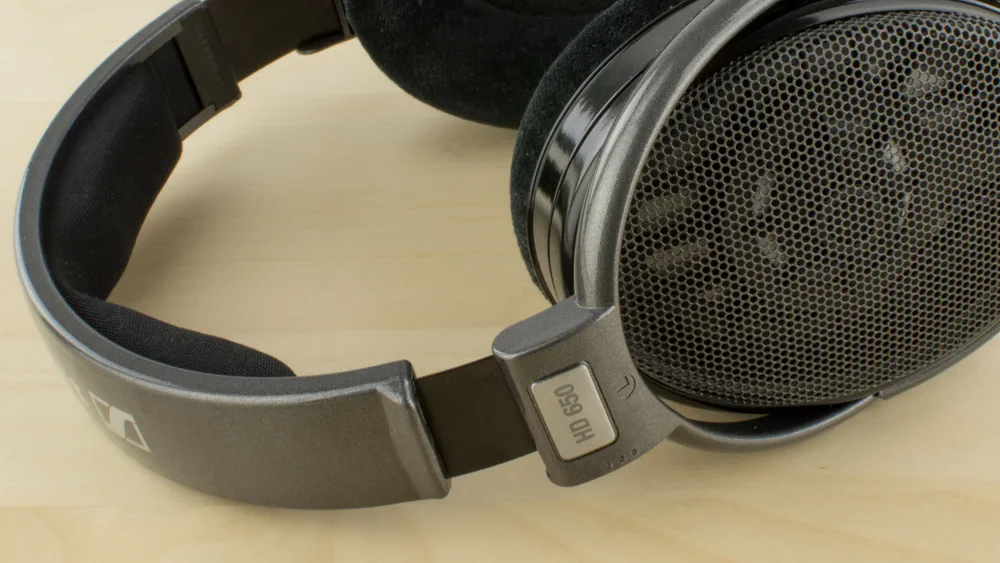
The perforated grilles of the Sennheiser HD 650 are one of the most famous pairs of open-back headphones.
Top Picks:
Open-Back Headphone
- Grado SR80x – Known for its lively and detailed sound signature, this open-back model has built a strong reputation among audiophiles for delivering an energetic listening experience.
- HIFIMAN HE400S – A popular planar magnetic open-back headphone that offers an expansive soundstage and natural audio presentation.
Closed-Back Headphone
- Audio‑Technica ATH‑M50x – A studio-grade closed-back headphone praised for its clear sound, strong bass response, and durable design.
- Sony MDR‑7506 – A long-time industry favorite used in professional recording studios thanks to its detailed sound and excellent passive isolation.
The tradeoff is real, though. Sound leaks both ways. Everyone near you can hear what you are listening to, and everything around you bleeds into what you hear. In the right environment, that is a non-issue. In the wrong one, it is a dealbreaker.
What this means for you in practice:
- Music feels spacious and natural rather than pressurized and closed-in
- Long listening sessions cause significantly less ear fatigue
- Internal components are often visible through the mesh, which is oddly satisfying
- Airflow keeps your ears cool even during marathon mixing sessions
- Completely unsuitable for noisy environments or anywhere you share space with other people
What Are Closed-Back Headphones?
If open-back headphones are a window, closed-back headphones are a soundproofed room with the door shut.
The earcups are fully sealed, creating a pressurized acoustic chamber that does two things simultaneously: it stops outside noise from getting in, and it stops your audio from getting out.
This is the design that built the headphone industry. The one you see on commuters, studio engineers tracking vocals, office workers who need to actually concentrate, and anyone who has ever tried to listen to music on a plane without slowly losing their mind.
The sealed design does create its own acoustic challenges. Sound that cannot escape has a tendency to bounce around inside the cup, creating reflections that can muddy the listening experience if the engineer is not careful
There is something psychologically satisfying about a great closed-back headphone, too. The outside world genuinely disappears. Not fades, not dims. Disappears. For commuting, focused work, late-night listening when others are asleep, or any professional situation where sound leakage simply cannot happen, nothing else makes sense.
What this means for you in practice:
- Outside noise stays outside, and your audio stays yours
- Bass feels tighter and more physical due to the sealed acoustic chamber
- Perfect for commuting, offices, planes, and shared spaces
- High-end models use internal dampening to prevent the “boxy” sound that cheaper versions suffer from
- Ears run warmer during long sessions compared to open-back designs
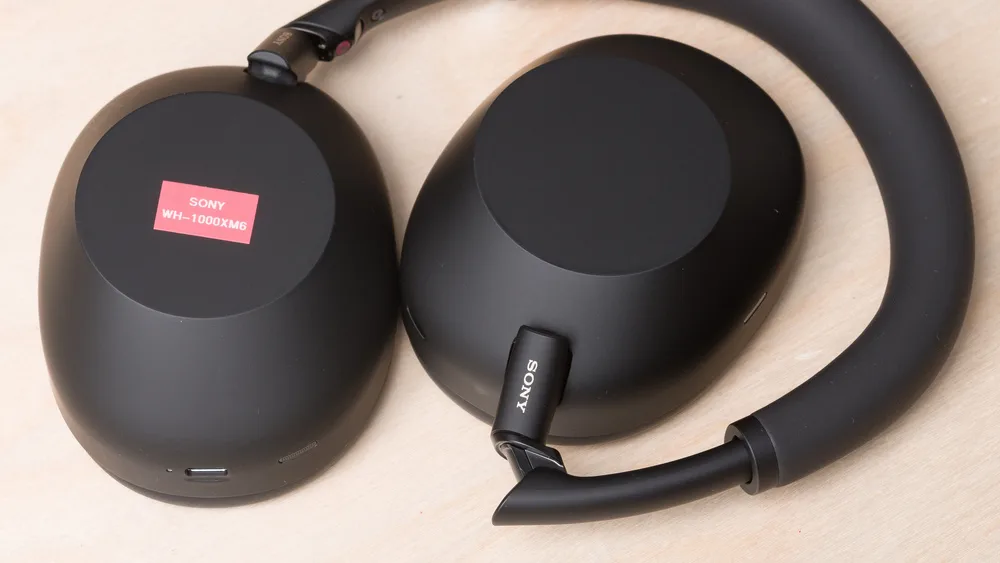
The sealed ear cups of the Sony WH-1000XM6 are a pair of premium closed-back headphones.
The Difference Between Open Back vs Closed Back Headphones
Identifying the difference between open and closed-back headphones is simple when you look at the functional trade-offs.
| Feature | Open-Back Headphones | Closed-Back Headphones |
| Sound Leakage | High (others hear your audio) | Minimal (private listening) |
| Noise Isolation | None (you hear everything) | High (blocks ambient noise) |
| Bass Response | Lean and natural | Punchy and emphasized |
| Breathability | Excellent (vented) | Limited (can trap heat) |
| Best Environment | Quiet home or studio | Travel, office, or public |
Sound Quality and the Magic of “Soundstage”
When comparing open back vs closed back for music, the deciding factor is often “soundstage.” This term describes the perceived width, depth, and three-dimensional imaging of the audio. It is the difference between hearing a flat wall of sound and being able to pinpoint the exact location of a violin in a virtual room.
Open-back models provide a superior soundstage with better instrument separation. The music feels expansive and live because sound waves can dissipate naturally. Closed-back models typically offer a narrower stage but provide a “punchier” response.
The sealed air volume increases pressure, which emphasizes the low-end. This makes them excellent for modern genres that require impactful bass, though they may lack the airy transparency of an open design.
Comfort and Breathability: The Long Session Factor
Comfort is a matter of physics. Open-back designs naturally prevent moisture and heat from building up because the ears are not sealed in a vacuum. This is a massive benefit for professional editors who wear gear for eight hours a day.
Closed-back designs can trap heat, which often leads to discomfort. However, modern engineering has introduced pressure-relieving headbands and high-quality cushioned ear cups to mitigate this. When selecting gear, pay attention to the clamping force.
A well-designed closed-back headset like the Space One Pro uses soft materials to ensure that the isolation does not come at the cost of physical fatigue.
Noise Isolation and Sound Leakage: Social Etiquette
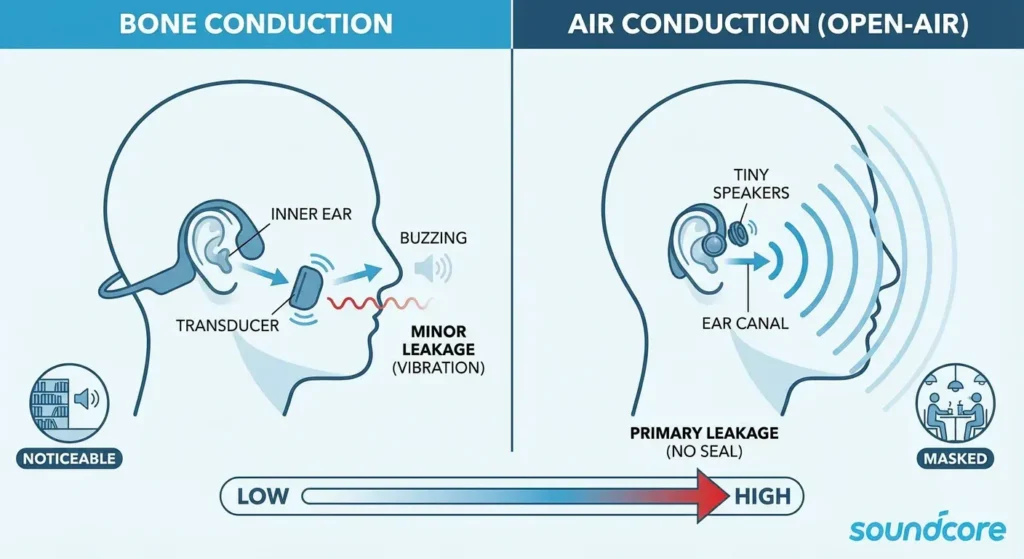
You must distinguish between “leakage” and “isolation.” Leakage is the audio bleeding out to your neighbors. Isolation is the external noise bleeding in to distract you.
Using open-back headphones in a quiet library is an amateur mistake. Because the drivers are exposed, everyone around you will hear your music with startling clarity. C
onversely, closed-back models are essential for survival in noisy environments. They protect your hearing by allowing you to listen at lower volumes since you are not constantly fighting to hear over a jet engine or a loud air conditioner.
Best Use Cases: Gaming and Studio Work
Specs look great on paper. But the real test happens the moment you’re mid-match with enemies closing in, or standing behind a studio glass watching a vocalist nail their third take. That’s when headphone design stops being theoretical and starts being everything.
Open backs for gaming
It is about one thing: knowing where danger is before it finds you. The natural, spacious soundstage that open backs create turns audio into a map. Footsteps two floors above you. A reload is happening just around the corner.
Distant gunfire that tells you exactly which direction to avoid. Sound spreads around you rather than bouncing inside your head, and in competitive play, that spatial awareness is not a luxury. It is the difference between the killcam being you or someone else.
If you want to understand how audio performance affects reaction time and competitive play, our guide on gaming headset vs headphones latency explains how sound delay can impact gaming performance.
Closed backs own the studio
When a vocalist is tracking a performance, the backing music playing through their headphones cannot be allowed to bleed into the microphone. Even a whisper of leaked audio can contaminate an otherwise perfect take, and no amount of post-production fixes a ruined recording.
Closed backs seal everything in, keeping playback contained, microphones clean, and sessions moving. Every serious tracking environment defaults to closed backs for exactly this reason.
Same price point. Same driver quality. Completely different tools for completely different jobs.
Which One Should You Choose?
Forget the spec sheets for a second. The real question is not which headphone is technically superior. It is which one survives contact with your actual life?
If your listening happens in quiet spaces and you are the kind of person who notices the breath a vocalist takes before a chorus, open backs were made for you. They reward stillness and attention with a soundstage that feels less like headphones and more like the room itself is playing music.
If your world is louder, messier, and less cooperative, closed backs are your answer. Commutes, offices, late nights when everyone else is asleep. They seal you inside your own private concert and refuse to let the outside world buy a ticket.
Cannot decide? Semi-open headphones exist exactly for this moment of hesitation. A little airflow, a little isolation, a reasonable compromise that refuses to fully commit to either extreme. Sometimes that is exactly what you need.
The best headphones are not the ones with the most impressive numbers. They are the ones you forget you are wearing because they fit so naturally into the way you already live. Whether you’re using open-back headphones to appreciate the expansive soundstage or closed-back headphones to isolate yourself from noisy surroundings, pairing them with genres like Lo-Fi music can enhance your listening experience significantly.
Conclusion
The right headphones do not just play music. They change the way music feels.
Open backs make your favorite tracks feel like a live performance happening around you. Closed backs turn them into something deeply personal, a world that belongs entirely to you the moment you press play. Neither is wrong. They are just built for different versions of the same love for sound.
Figure out where your listening life actually happens, and the choice makes itself.And when it clicks? That album you have heard a hundred times will sound like you are hearing it properly for the very first time. At SoundHub, we’re dedicated to exploring the vast universe of audio and sound accessories.
FAQs
1) Are open-back headphones better than closed-back headphones?
Neither is universally better; it depends on how you listen. Open-back wins for natural, spacious sound in quiet spaces. Closed-back wins for isolation, bass, and on-the-go use.
2) Do open-back headphones leak sound?
Yes, sound travels both ways. People nearby can hear your music, and outside noise bleeds in. Keep them for quiet, private environments only.
3) Are closed-back headphones better for gaming?
For blocking distractions, yes. But competitive gamers often prefer open-back because the wider soundstage makes pinpointing footsteps and directional audio much more accurate.
4) Why do open-back headphones have a better soundstage?
The vented earcups let sound move freely, reducing internal pressure and reflections. The result is audio that feels three-dimensional and natural rather than trapped inside your head.