



Today, headphones are one of the most widely used consumer audio technologies. Research from the Audio Engineering Society notes that hundreds of millions of headphone units are sold globally every year, reflecting the massive demand for personal audio devices and the growing role of headphones in everyday life.
Consider a world in which there are no headphones. Don’t listen to music while commuting in the morning. Don’t listen to podcasts as you stroll.
When were headphones invented, then? The explanation dates back to 1910, when Nathaniel Baldwin, an inquisitive engineer, constructed the first real pair by hand on his kitchen table.
Over the course of the following century, those cumbersome gadgets would gradually evolve into the wireless companions we depend on today. What began as a modest experiment would eventually ignite an entire industry.
The history of headphones goes beyond technology. It tells the story of how a straightforward concept transformed the way people listen, transforming sound into a very intimate experience. Today, there are many different styles and types of headphones available for different listening needs, from casual music sessions to professional audio work.
Key Takeaways
- The first headphones appeared in the 1880s for telephone operators.
- Nathaniel Baldwin invented modern headphones in 1910.
- John Koss introduced stereo headphones in 1958, bringing personal music listening.
- The Sony Walkman (1979) made headphones portable and popular worldwide.
- Dr. Amar Bose created noise cancelling headphones in 1989.
- Bluetooth headphones emerged in the early 2000s, reducing the need for wires.
- True wireless earbuds like AirPods popularized cordless listening after 2017.
The Primal Era: 10-Pound Bricks and Telephone Operators (1880s)
Headphones have nothing to do with music before playlists, streaming, or anything wireless. They served as instruments. Early headphones were built primarily for communication rather than entertainment, a design philosophy that still influences modern headset technology used in communication environments today.
In the 1880s, engineers were frantically searching for a way to deliver sound directly to the ear in noisy switchboard rooms, which were a jumble of tangled wires and shouted voices.
In 1881, the first significant attempt was made. For telephone operators, inventor Ezra Gilliland created a shoulder-resting gadget that weighed more than ten pounds. It was more something you endured than something you wore:
- A large speaker in proximity to the ear
- Wires that lead back to a disorganized switchboard
- Continuous physical exertion is required to hear a single voice clearly
Then things began to change. The duplex telephone, which French engineer Ernest Mercadier created in 1891, resembled what we slide into our ears now quite a little. It was difficult to overlook the distinctions from everything before it:
- Earpieces that are smaller and fit inside the ear
- noticeably lighter design
- Rubber tips are designed to be both comfortable and functional.
A listening gadget felt like it belonged to the wearer for the first time.
London was secretly conducting an experiment that seemed centuries ahead of its time at about the same period. Through telephone lines, users of a service known as the Electrophone were able to enjoy live opera and theater performances without ever leaving their homes.
You could listen to a live performance taking place all across the city by holding a stethoscope-shaped headset to your ear for about five pounds a year.

The Kitchen Table Breakthrough: Nathaniel Baldwin (1910)
If we examine who invented headphones and when were headphones invented in their modern, recognizable form, the trail leads to a kitchen table in Utah. In 1910, Navy lieutenant Nathaniel Baldwin hand-soldered the first pair of audio headphones to help him hear Mormon sermons more clearly.
Initially, private investors scoffed at the device’s “DIY” appearance. However, the U.S. Navy recognized the technical genius behind Baldwin’s invention. Their skepticism turned to amazement when they realized his design was significantly more sensitive than any existing radio equipment.
Crucially, Baldwin’s moving-iron diaphragm system required no external power source to function. The Navy placed an order for 100 pairs, launching headphones into the military mainstream during World War I.
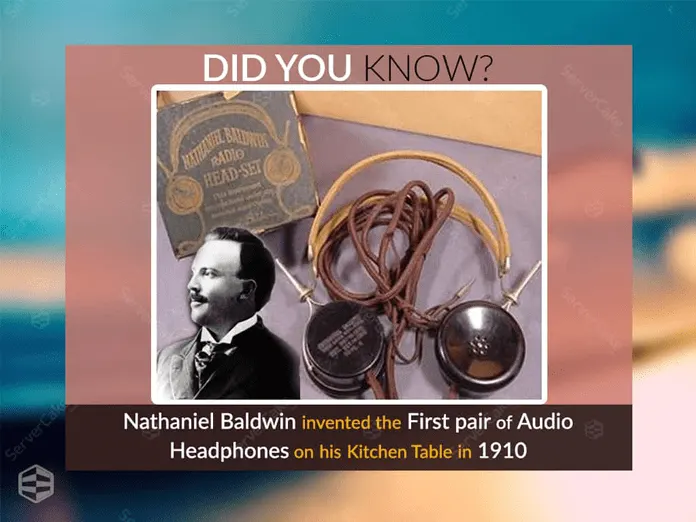
Baldwin’s key design innovations
- Two padded ear cups: Providing a seal for better sound isolation.
- Two headbands: Allowing the device to sit securely on the head for hands-free use.
- Moving-iron diaphragm: A system capable of detecting faint radio signals that other equipment missed without needing external power.
Despite his technical brilliance, Baldwin’s story ends with a “historian’s detail” of grit and misfortune. A series of unwise investments and a stint in prison for mail fraud eventually bankrupted his company, leaving the inventor to watch from the sidelines as his design changed the world.
For decades, headphones were nobody’s hero. They lived in radio rooms and military bunkers, doing quiet, thankless work while the rest of the world listened to music through speakers in shared rooms.
Then 1937 arrived, and Beyerdynamic released the DT 48. It still looked like it belonged in a cockpit, but something had shifted underneath the industrial shell:
- A metal headband built to outlast everything
- Earcups that actually felt comfortable
- Drivers that made sound feel full and alive
Two years later, AKG did something even bolder with the K120. They made headphones look good. Elegant, even. The idea that listening gear could have a personality was so new it barely had a name.
But the moment that changed everything came in 1958, when a jazz lover named John Koss asked one quiet, electric question. What if ordinary people could hear music the way musicians hear it inside a studio?
His answer was the Koss SP 3:
- Speakers sitting inches from each ear
- Soft foam cradles the sides of your head
- Sound that no longer filled a room but filled you
People heard it and froze. Music had stopped being furniture. It was suddenly intimate, directional, alive inside the skull. Every note landed somewhere new.
The SP 3 did not just sell units. It planted something. A hunger for private sound that the world is still feeding today.
The Cultural Explosion: Rock, Radios, and the Walkman (1960s – 1980s)
By the 1960s, headphones were firmly embedded in pop culture. In 1966, John Koss leveraged the fame of the biggest band in the world to launch “Beatlephones.” This signature model featured a Beatles sticker and represented the first major celebrity endorsement in audio history.
Technical innovation continued alongside cultural shifts:
- Open-Back Design (1969): The first “open-back” headphones, the HD 414, were released by Sennheiser. Sennheiser significantly improved the user experience by allowing the back of the ear cups to be open, which resulted in a broader soundstage and a breathable design that made them comfortable for extended use.
- Radio Headphones: As a forerunner to wireless technology, “Radio Headphones” with integrated antennas first appeared in the 1960s, enabling users to listen to AM/FM broadcasts while on the go.
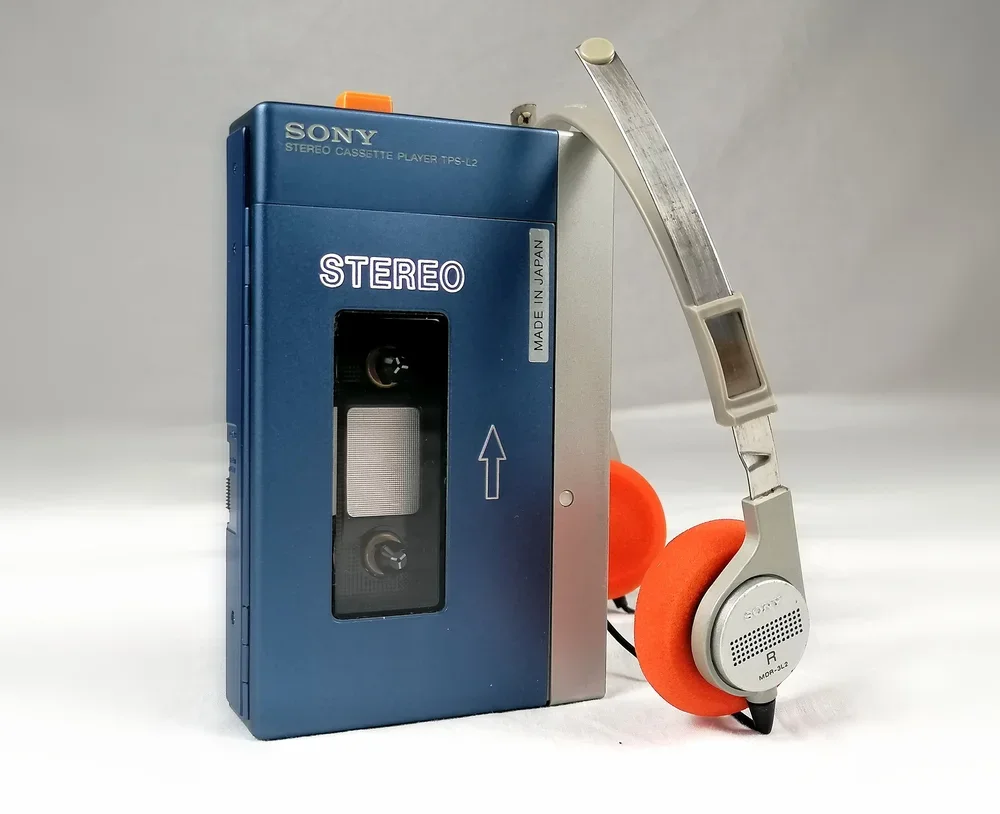
The most significant cultural revolution arrived in 1979 with the debut of the Sony Walkman (MDR 3L2).
This moved headphones from the home to the street, turning music into a mobile, personal activity. Scholars later described this shift as the “Walkman Effect,” where portable music players and headphones allowed listeners to reshape their environment and experience a private sound world even in public spaces.
The Quest for Silence and Specialized Tech (1989 – 1990s)
The world became noisier at some point. Open offices, commutes, and airports. Additionally, listeners began to desire something that seemed nearly extreme.
Silence.
Dr. Amar Bose started working to shield pilots from aircraft engines that were too loud in 1989. Creating a sound wave that filters out background noise before it reaches your ears was his nearly miraculous solution.
Research in aviation environments has shown that noise-cancelling headphones can significantly improve communication clarity by increasing the signal-to-noise ratio in loud environments such as aircraft cockpits.
This innovation eventually led to the modern noise cancelling headphones that many travelers and remote workers rely on today. By 2000, the same technology had evolved into the QuietComfort series, which made it possible for anyone, anywhere in the world, to find peace.
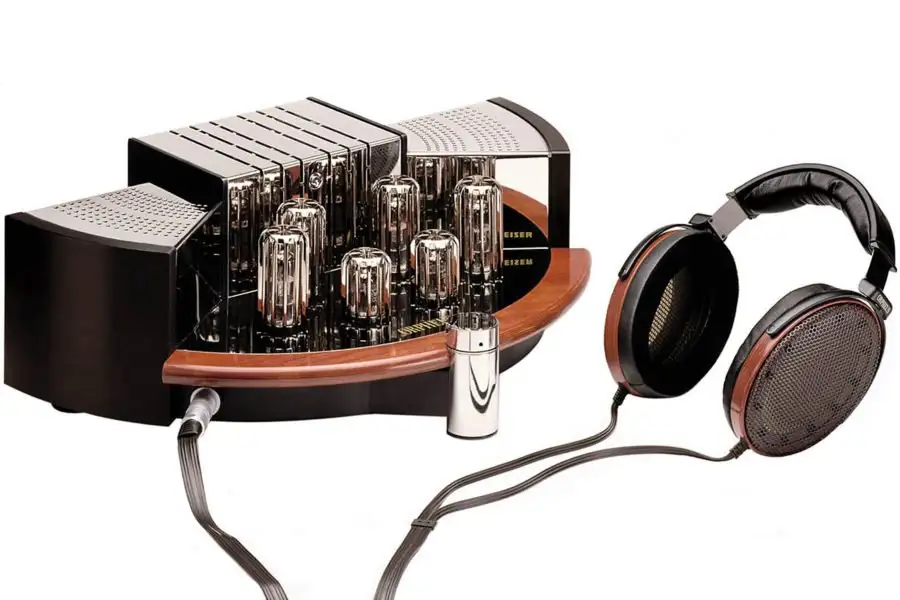
The 1990s continued to advance: Sennheiser Orpheus (1991) set a new ceiling for what luxury audio could actually sound like.
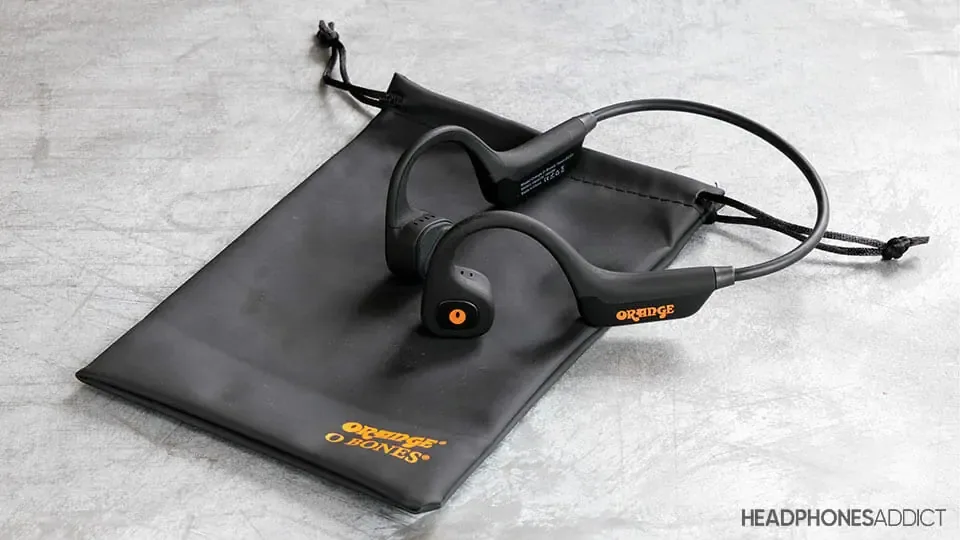
Bone conduction headphones (1994) sent sound through the skull itself, letting listeners hear music without losing awareness of the world around them.
Headphones had outlived their initial use by the end of the decade. They were no longer merely hearing things. They had to do with deciding how much of the outside world you wanted to let in.
Cutting the Cord: The Digital and Bluetooth Era (2000s)
In 2001, the iPod revolution coincided with the year 2000. Apple’s “iconic white earbuds” signaled the complete shift to digital MP3 files and became a global fashion statement.
In terms of when Bluetooth headphones were created, people started to use the technology around 2004. Even though early models had trouble with their limited music bandwidth, they signaled the beginning of the end for the conventional headphone cable.
This shift also started the long debate between wired vs wireless headphones, with each offering different advantages in sound quality, convenience, and portability. Heard of Bluetooth version 6.0? Well, that’s the future of tech.
With that being said, you can learn how different that is from the existing 5.0 and 4.0 versions. The emergence of Beats by Dre and Monster in 2008 caused the market to change once more, turning headphones into “bold fashion statements” and “status symbols,” emphasizing loud bass and celebrity endorsements.
The True Wireless Revolution (2015 – Present)
The development of “True Wireless” (TWS) technology marked the last step toward total independence. We go to 2015 and the Onkyo W800BT to determine when wireless headphones in their TWS form were created. But with the introduction of Apple’s AirPods in 2017, the category took off. AirPods changed the industry standard with their 4-gram weight and auto-pause technology.
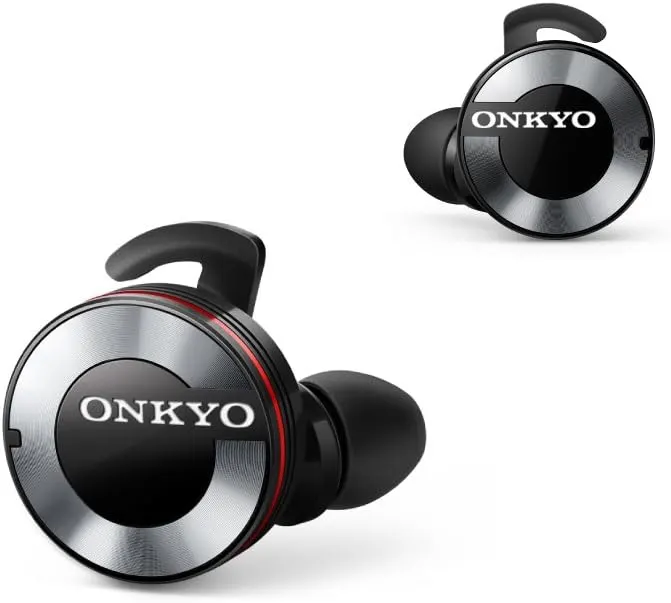
Source: ONKYO Japan Domestic Model Wireless Bluetooth Earphone
| Milestone | Key Innovation | Year |
| Digital Style | Apple iPod Earbuds | 2001 |
| Status Symbols | Beats by Dre | 2008 |
| First TWS | Onkyo W800BT | 2015 |
| TWS Dominance | Apple AirPods | 2017 |
The Future: “Computers for Your Ears”
Today, headphones are evolving into “hearables,” sophisticated computers for your ears. Industry experts predict several transformative paths:
- Hearables: Devices acting as heart rate monitors, hearing protectors, and personal trainers.
- Neural Interfaces: Potential technology for music beamed directly to the brain.
- Spatial Audio: Creating “personal IMAX” experiences for VR and AR applications.
Conclusion
The headphone is one of the most advanced inventions.
Originally, it was a ten-pound device designed for telephone operators who only needed to hear a voice over a line. Music was not on anyone’s mind. Joy was not on anyone’s mind. It gradually turned into everything else.
Switchboards were replaced by radios, cassette players by radios, and smartphones by cassette players. Headphones trailed us everywhere, becoming increasingly compact and advanced until they practically disappeared into our ears.
Since we now use them every day, it is also important to know how to clean headphones properly to maintain hygiene and sound quality.
However, size was never the true metamorphosis. It had to do with what people could accomplish with headphones. To lose yourself in a song while riding a packed train. to construct a private world within a public one.
That subdued superpower is still developing. The headphones are still unfinished. It is only the beginning.
FAQs
1) When were headphones first invented?
Modern headphones were invented in 1910 by Nathaniel Baldwin. Earlier listening devices existed in the 1880s for telephone operators, but Baldwin’s design introduced the first practical dual-ear headphones.
2) Who invented the first headphones?
The first recognizable headphones were created by Nathaniel Baldwin. His design was later adopted by the United States Navy for radio communication.
3) When did headphones become popular for music?
Headphones became popular for music in 1958, when John Koss introduced the first stereo headphones, allowing people to listen to music privately.
4) When did wireless headphones appear?
Wireless headphones began appearing around 2004 with Bluetooth audio devices, while Apple AirPods, in 2017, popularized true wireless earbuds.