


Choosing wireless headphones for your morning commute seems simple until you discover your $300 premium earbuds sound worse than expected. The culprit often lies not in the hardware but in the Bluetooth audio codec handling the wireless transmission between your phone and headphones.
Understanding these digital compression algorithms can transform your listening experience and help you make informed purchasing decisions.
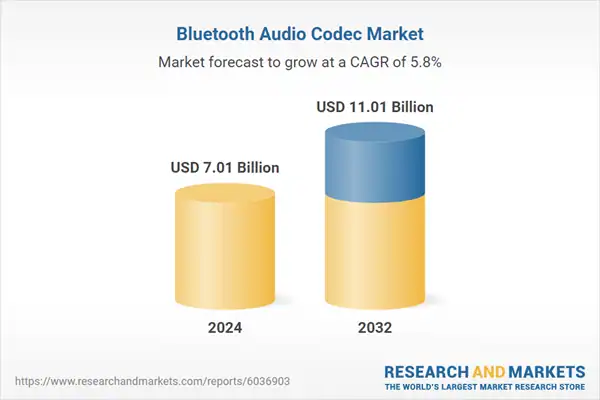
The global Bluetooth audio codec market reached $6.1 billion in 2024 and projects 5.8% growth through 2032, driven by expanding wireless audio adoption. With the wireless headphones market valued at $71.7 billion in 2025, codec selection directly impacts audio quality for millions of users daily.
This guide explains how different codecs affect your music, which devices support various standards, and how to optimize your audio setup.
Key Takeaways
- LDAC offers highest quality at 990 kbps with 24-bit/96 kHz support, but requires Android devices and strong connections for full performance
- AAC works best on Apple devices through hardware optimization, delivering excellent quality at moderate bitrates with good battery efficiency
- aptX HD balances quality and compatibility at 576 kbps with broader device support than LDAC across Android and Windows platforms
- Gaming requires low-latency codecs like aptX Low Latency (~40ms) rather than high-quality options that introduce audio delays
- Codec compatibility between both devices determines actual performance, not just individual device specifications or theoretical maximums
What Are Bluetooth Audio Codecs
Bluetooth audio codecs compress and decompress digital audio data for wireless transmission between source devices and headphones or speakers. These algorithms balance audio quality, bandwidth limitations, and battery consumption to deliver acceptable sound over Bluetooth’s restricted data channels.
Every Bluetooth audio device must support SBC (Subband Codec) as the universal fallback standard, but manufacturers add premium codecs like AAC, aptX, and LDAC for enhanced performance.
When you connect headphones to your phone, both devices negotiate the highest quality codec they both support. Understanding different Bluetooth versions helps explain why newer standards enable better codec performance through improved bandwidth and stability.
The codec selection process happens automatically during device pairing, typically choosing the best available option. However, Android users can manually override codec selection through developer settings, while iOS devices default to AAC optimization. This negotiation ensures compatibility across all Bluetooth audio equipment while maximizing quality when premium codecs are available.
Major Bluetooth Codecs Explained
SBC: The Universal Baseline
SBC operates at up to 328 kbps maximum bitrate with 16-bit depth and supports sampling rates up to 48 kHz. As the mandatory codec for all Bluetooth audio devices, SBC provides universal compatibility but delivers the most compressed audio quality among current standards.
The Low Complexity Subband Coding design prioritizes processor efficiency over audio fidelity, making it suitable for basic applications but noticeable to trained ears. SBC’s compression artifacts become apparent in complex musical passages with multiple instruments or high dynamic range content. Despite limitations, SBC remains essential as the fallback codec when devices lack shared premium alternatives.
AAC: Apple’s Optimized Standard
Advanced Audio Coding delivers up to 320 kbps bitrate with superior compression efficiency compared to SBC, particularly on Apple devices where hardware-optimized encoding produces exceptional quality at 256 kbps. AAC supports 16-bit depth at 44.1 kHz sampling rate, matching CD audio specifications.
Apple’s implementation of AAC provides objectively excellent sound quality through dedicated hardware acceleration on iPhones and iPads. Android devices typically show less optimized AAC performance due to software-based encoding, though some Qualcomm chipsets deliver improved results. AAC introduces higher latency than other codecs but works well for music playback where timing precision matters less.
aptX Family: Qualcomm’s Progressive Solutions
Standard aptX operates at 352 kbps bitrate with 16-bit depth, delivering near-CD quality audio with approximately 40ms latency suitable for video watching and casual gaming. The Adaptive Differential Pulse-Code Modulation encoding preserves more audio detail than SBC while maintaining broader device compatibility.
aptX HD increases bitrate to 576 kbps with 24-bit depth at 48 kHz sampling rates, supporting high-definition audio transmission. University of Salford testing concluded that participants were unable to consistently detect differences between 96kHz/24-bit source audio and aptX HD encoded content, demonstrating near-transparent quality.
aptX Adaptive dynamically adjusts between 279-420 kbps based on connection stability and content complexity. This variable bitrate approach maintains consistent audio quality in challenging radio frequency environments while optimizing battery life during stable connections.
Which Bluetooth Codec Is Better, SBC or AAC?
AAC provides superior sound quality compared to SBC through more efficient compression algorithms and higher effective bitrates, especially on Apple devices where hardware optimization delivers exceptional performance. AAC maintains better frequency response and lower compression artifacts than SBC’s subband coding approach.
Testing reveals AAC at 256 kbps often matches or exceeds SBC’s maximum 328 kbps output quality due to advanced psychoacoustic modeling. However, SBC offers better universal compatibility and typically consumes less battery power during playback. For most users, AAC represents a meaningful upgrade over SBC when available on both source and receiving devices.
Is aptX Lossless Better Than LDAC?
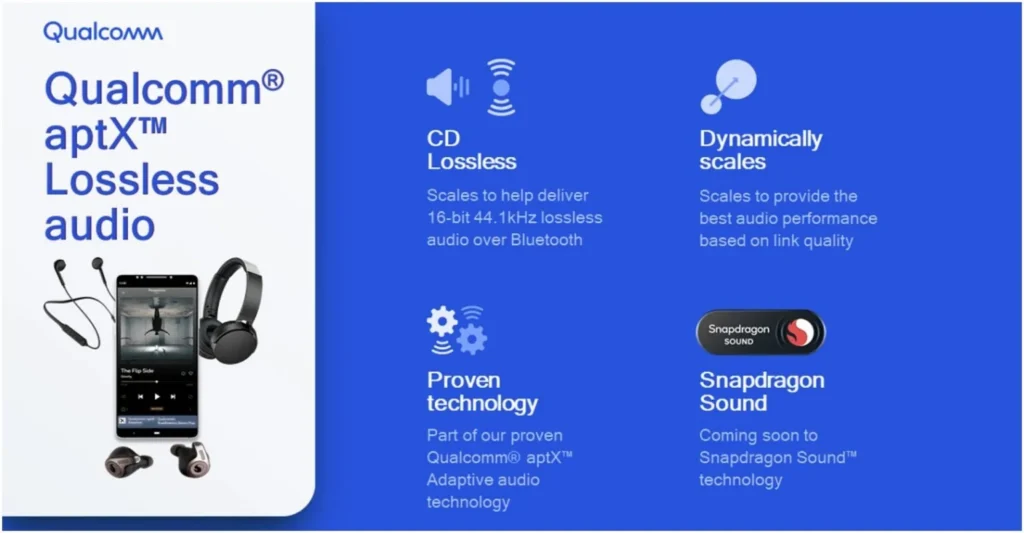
aptX Lossless operates at 1.1-1.2 Mbps providing mathematically perfect CD-quality audio reproduction without any compression losses, while LDAC reaches 990 kbps maximum bitrate with minor compression artifacts. Both codecs support 24-bit depth, but aptX Lossless guarantees bit-perfect transmission.
LDAC offers three adaptive bitrate modes (330/660/990 kbps) that adjust automatically based on connection strength, providing more consistent performance in real-world conditions.
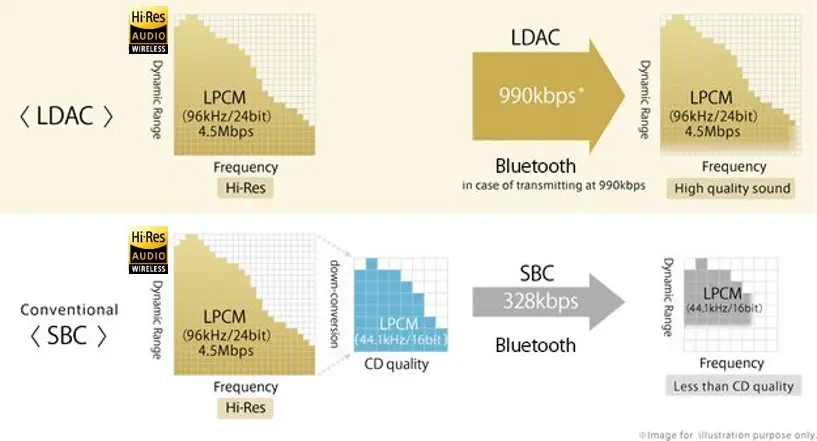
SoundGuys testing shows that LDAC 990 kbps mode matches Hi-Res specifications up to 47 kHz, though most smartphones default to 660 kbps or lower settings. aptX Lossless requires both perfect connection conditions and compatible hardware to achieve full performance.
Which Is Best, AAC or LDAC?
LDAC delivers superior theoretical audio quality with up to 990 kbps bitrate supporting 24-bit/96 kHz resolution, while AAC tops out at 320 kbps with 16-bit/44.1 kHz specifications. For Android devices with LDAC support, the Sony codec provides measurably higher resolution audio transmission.
However, AAC’s optimized implementation on Apple devices often produces more consistent quality than LDAC’s variable performance across different Android manufacturers. AAC also offers lower latency and better battery efficiency compared to LDAC’s high-bandwidth requirements. Device ecosystem compatibility often determines which codec delivers better real-world performance for individual users.
Codec Compatibility Across Devices
Android Device Support
Android 8.0 and later includes native LDAC support through the Android Open Source Project, enabling manufacturers to integrate Sony’s codec without additional licensing costs. Most premium Android smartphones support multiple codecs including aptX, aptX HD, and LDAC, though specific implementations vary by manufacturer and chipset.
Users can manually select preferred codecs through Android Developer Settings, overriding automatic negotiation to force higher quality modes. Samsung devices often include Samsung Scalable Codec alongside standard options, while Google Pixel phones prioritize LDAC integration.
When choosing headphone specifications for Android use, verify codec compatibility between your specific phone model and intended headphones.
Apple Device Optimization
iOS devices exclusively use AAC for Bluetooth audio transmission, with Apple’s custom implementation delivering superior quality compared to generic AAC encoders found in other platforms.
AirPods and Beats products leverage additional proprietary optimizations beyond standard AAC specifications.
Apple’s hardware-accelerated AAC encoding produces quality comparable to higher-bitrate codecs while maintaining excellent battery life and connection stability. Third-party headphones receive standard AAC transmission, which still delivers good quality but lacks the ecosystem-specific enhancements available with Apple audio products.
Users considering wired vs wireless headphones should factor in Apple’s AAC optimization when evaluating audio quality trade-offs.
What Should My Bluetooth Audio Codec Be?
Choose AAC for Apple devices where hardware optimization delivers exceptional quality and ecosystem integration. Android users should prioritize LDAC for high-resolution audio or aptX HD for balanced quality and compatibility across more devices.
For gaming and video applications, select aptX Low Latency or aptX Adaptive to minimize audio delay below 40ms. When universal compatibility matters most, SBC provides reliable fallback support across all Bluetooth devices.
Consider your primary use cases, device ecosystem, and whether both source and receiving devices support your preferred codec before making decisions.
Which Bluetooth Codec Should You Choose
Gaming and Low Latency Needs
Gaming applications require codecs with latency below 40ms to maintain synchronization between visual and audio elements. aptX Low Latency specifically targets gaming use cases with approximately 40ms total system latency including Bluetooth transmission and headphone processing delays.
aptX Adaptive automatically reduces bitrate during demanding scenarios to maintain connection stability while preserving low latency performance. Standard AAC introduces 60ms+ encoder latency plus additional Bluetooth transmission delays, making it unsuitable for competitive gaming.
When selecting headphones for gaming, verify both low-latency codec support and total system latency specifications.
Music Streaming Priorities
High-quality music streaming benefits from LDAC’s 990 kbps maximum bitrate when both devices support the full specification and maintain strong Bluetooth connections. LDAC preserves detail in complex musical arrangements and high-resolution source files that lower-bitrate codecs compress away.
aptX HD provides excellent music quality at 576 kbps with better device compatibility than LDAC, making it suitable for users who prioritize consistent performance across different headphones and source devices.
AAC delivers satisfactory music quality for most listeners, particularly when properly implemented on Apple devices or high-quality Android hardware.
Battery Life Considerations
Lower-bitrate codecs generally consume less battery power in both source devices and headphones due to reduced processing requirements and shorter transmission times. SBC offers the best battery efficiency among current codecs, followed by standard AAC and aptX.
LDAC’s high-bandwidth requirements can reduce headphone battery life by 10-20% compared to more efficient codecs, while aptX Adaptive’s variable bitrate approach balances quality and power consumption based on usage patterns.
When extended battery life is priority, choose codecs with moderate bitrates rather than maximum quality options that drain batteries faster during extended listening sessions.
Conclusion
Bluetooth audio codecs significantly impact your wireless listening experience, with choices ranging from universal SBC compatibility to high-resolution LDAC transmission. The best codec depends on your device ecosystem, listening priorities, and usage patterns rather than specifications alone.
Apple users benefit from AAC’s hardware optimization, while Android users should consider LDAC for premium audio or aptX variants for broader compatibility. Gaming applications require low-latency codecs, and battery-conscious users may prefer moderate-bitrate options over maximum-quality settings that drain power faster.
FAQs
1) What Is the Best Quality Bluetooth Codec?
LDAC offers the highest audio quality with 990 kbps bitrate and 24-bit/96 kHz support, followed by aptX Lossless for true CD-quality and aptX HD for balanced high-resolution performance.
2) Is aptX Lossless Better Than LDAC?
aptX Lossless provides true CD-quality audio without compression at 1.1-1.2 Mbps, while LDAC offers higher resolution capabilities at 990 kbps with minimal quality loss for hi-res files.
3) Which Bluetooth Codec is Better, SBC or AAC?
AAC delivers superior sound quality compared to SBC, especially on Apple devices, with better compression efficiency and lower latency, though SBC offers universal compatibility and better battery life.
4) Which is Best, AAC or LDAC?
LDAC provides higher resolution audio for Android devices with 990 kbps support, while AAC offers optimized performance and efficiency specifically within Apple’s ecosystem and compatible apps.