



Imagine you are preparing for a long-haul flight, settling into a bustling coffee shop for a deep work session, or navigating the loud chaos of your daily commute. You reach into your bag for your gear, but you are met with a fundamental choice: which design will actually serve your ears for the next few hours?
Deciding between Over Ear vs On Ear Headphones is a common hurdle for many listeners. While both styles feature a traditional over-the-head design, the way they physically interact with your ears changes everything from the quality of the bass to how long you can wear them before feeling “ear fatigue.”
The popularity of personal audio devices continues to grow rapidly.
Research from Statista estimates that the global headphone market will exceed $30 billion in revenue by 2027, reflecting how essential headphones have become in everyday life.
Think of selecting your headphones like picking a pair of shoes: one pair is designed for the marathon of an eight-hour workday or a cross-country flight, while the other is built for the quick sprint of a gym session or a walk to the train.
As a senior audio engineer, I have found that the right pair is rarely about the highest price tag; it is about the “shape of your day.”
Key Takeaways
- Over-ear headphones cover the entire ear, while on-ear headphones sit directly on the ear.
- Over-ear models usually deliver better sound quality, deeper bass, and stronger noise isolation.
- On-ear headphones are lighter, smaller, and more portable for everyday use.
- Over-ear headphones are better for long listening sessions and immersive audio.
- On-ear headphones keep ears cooler but may cause pressure after extended use.
- The right choice depends on where you listen and how long you wear your headphones.
Decoding the Designs: What is the Real Difference?
To make the right investment, you must understand the physical architecture of these two styles.Over-ear headphones, technically known as circumaural headphones, feature large, plush ear cups designed to completely engulf the entire ear.
By creating a physical seal against the skull, they act as a “shell” that isolates your hearing from the environment. Premium models like the Sonos Ace or the Sony WH-1000XM5 are prime examples of this design.

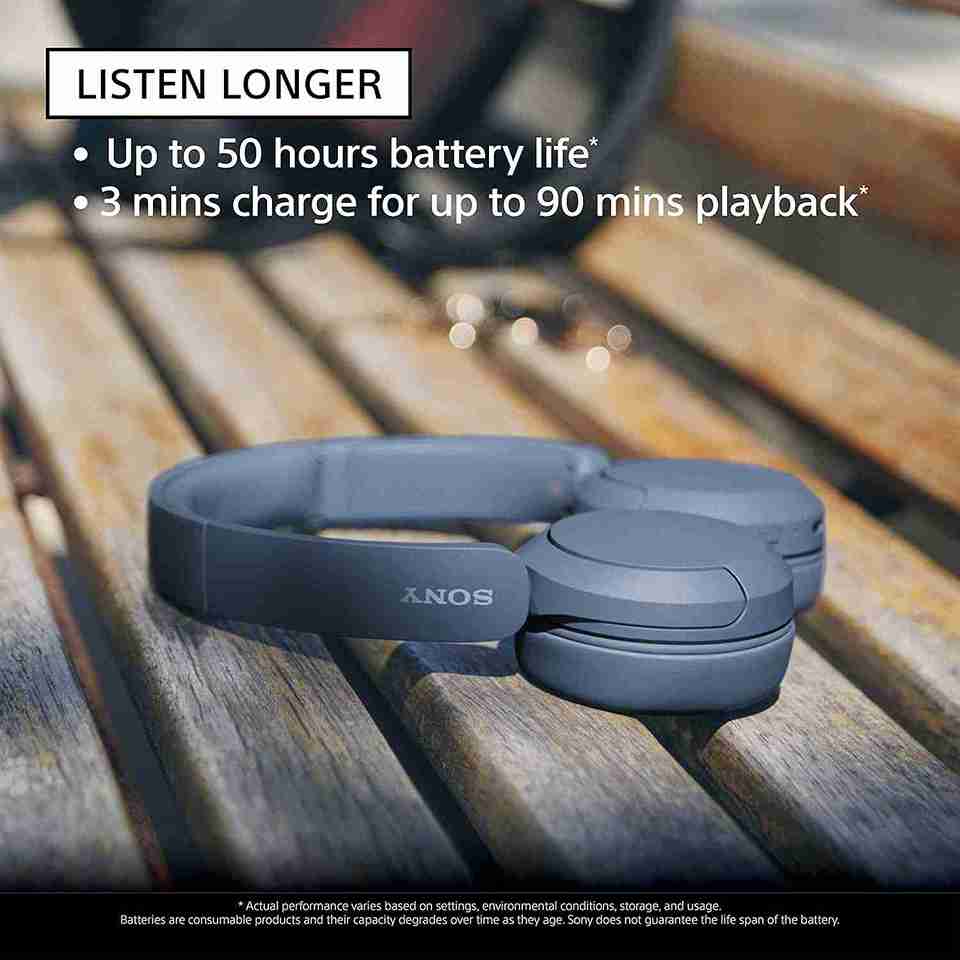
On-ear headphones, or supra-aural headphones, use smaller cushions that rest directly on the outer ear cartilage. They do not enclose the ear, but rather sit against it. You can see this in more compact models like the Sony WH-C520 or professional wired options like the Austrian Audio Hi-X50.
There is a simple “Visual Test” to distinguish them in the real world: if you can see the person’s ears while they are wearing the device, they are on ears. If the ears are completely hidden behind the cushions, they are over ears.
The 7 Key Differences Explained
Understanding these technical trade-offs will help you decide which pair belongs in your daily carry.
1. Design and Physical Structure
Over-ear models use a complete enclosure philosophy, utilizing thick memory foam and wider headbands to manage their larger footprint.
On-ear models follow a “cushion” philosophy: they are smaller, lighter, and occasionally use a neckband design that rests on the back of the neck. When considering on ear vs over ear headphones, it is a choice between a full seal and a compact pad.
2. Comfort and Pressure Distribution
Comfort is a matter of physics. Over-ear headphones distribute their weight and clamping force around the ear, resting on the bones of the skull. On-ear headphones apply direct pressure to the ear cartilage itself. While onears are lighter, the direct pressure can feel like a “vise” after an hour or two.
Over ears are generally the winner for marathon sessions, though they can feel more cumbersome due to their bulk.
3. Sound Quality and Audio Depth
Sound quality is a critical factor for enthusiasts. Over-ear headphones, with their larger headphone drivers, are generally capable of delivering superior sound quality and a more immersive audio experience. Larger drivers can move more air, delivering deeper bass and a more expansive, three-dimensional soundstage.
This provides a level of immersion that is difficult to find when comparing headphones vs earphones. However, there is an exception for on-ear models: some models are “open-backed,” like the Grado SR80x. These leak sound to the room but offer a more natural, spacious soundstage than many closed over ears.
For studio work, over ears are often preferred because they can handle high impedance requirements for more detailed audio. In such cases, the concept of Impedance comes into the picture for companies producing headphones.
4. Noise Isolation and Cancellation
Over-ear headphones have a natural “Head Start” because of passive isolation: the physical seal blocks out external noise. This makes Active Noise Cancellation (ANC) far more effective. In fact, high-end over-ears like the Soundcore Space Q45 can reduce ambient noise by up to 98%.
While on-ear wireless headphones can feature ANC, it is often less effective because sound leaks through the gaps where the cushion meets the ear. Expert gear now offers four distinct levels of quiet: Active, Adaptive, True Adaptive, and Passive isolation.
5. Portability and Travel Convenience
If you are a frequent traveler who packs light, on-ear models are often the “traveler’s choice.” They are less bulky, lighter, and frequently feature foldable hinges. Over ears range from “big to huge,” and even when they fold, they require a significantly larger portion of your backpack or carry-on bag.

Source: iKF T1 Wireless Bluetooth Headphones Over Ear Wired Headset
6. Battery Life and the “Space Advantage”
Because over-ear headphones have larger internal cavities, they can house physically larger batteries. This results in superior playtime.
While compact on-ear models offer enough power for a day or two of casual use, our top pick: For lasting tunes and hassle-free connections, over-ear headphones are the winning choice Sony WH-1000XM5, has been rated and selected as the best headphones as of 2024 when it comes to battery life and connectivity.
Check out its review “here,” which breaks down every aspect of this wireless headphone.
7. Ear Health and Temperature
There is a distinct trade-off here. Over-ear models trap air around the ear, which can make your ears “hot” or “sweaty” in warm environments. On-ear models allow for more air circulation, but the clamping force required to keep them secure can lead to “cartilage fatigue.”
For those with many piercings or glasses, the on-ear design may be less likely to interfere with your hardware. Listening habits also play an important role in ear health.
According to the World Health Organization, over 1 billion young people worldwide are at risk of hearing loss due to unsafe listening practices, particularly when using personal audio devices at high volumes for extended periods.
Learning how to properly clean and maintain your headphones can also help maintain hygiene and comfort during long listening sessions, especially when headphones are worn daily.

Real-Life Use Cases: Which Style Fits Your Lifestyle?
- The Commuter: On-ear headphones are ideal for navigating city streets. They are lighter for short bursts of travel and allow you to stay aware of traffic.
- The Office Power User: Over-ear headphones are the tool for “deep work.” Models like the Sonos Ace use background noise suppression and voice targeting to ensure your calls and focus remain crystal clear.
- The Gamer and Producer: If you need spatial audio cues or “soundstage” accuracy for mixing, over ears are the professional standard.
- The Casual Home Listener: For long jams on the couch, the comfort and rich, immersive sound of over ears usually win out.
- The Fitness Enthusiast: While on-ear headphones are less “sweaty” than over-ear headphones, many athletes are now moving toward “Open Ear” technology. Models like the Shokz OpenRun Pro 2 or OpenFit 2+ use bone conduction or air conduction to keep the ear canal open, providing the ultimate situational awareness and stability for runners.
Quick Decision Guide
Still unsure which side of the over ear vs on ear headphones debate suits you best? Think about how long you listen, where you usually wear your headphones, and how immersive you want your sound to feel. These quick pointers will help you decide in seconds.
Choose Over-Ear IF:
- You want 98% noise reduction for flights or focused office work.
- You are an audiophile looking for high impedance support and a wide soundstage.
- You plan to wear your headphones for more than three hours at a time.
- You prioritize immersive, three-dimensional audio for gaming or movies.
Choose On-Ear IF:
- You value portability and want gear that folds easily into a small bag.
- You find that larger ear cups make your ears feel uncomfortably hot.
- You need to stay aware of your surroundings during short commutes.
- You want a lightweight fit for casual, short-term listening sessions.
“Audio Advice” has beautifully crafted a video to explain precisely and make users understand the differences in the sound between over ear vs on ear headphones.
More Than Just Gear
Somewhere between comparing specs and reading foam density charts, it’s easy to forget why any of this matters. It matters because music matters. The difference between simply hearing a song and truly feeling it often comes down to the headphones you choose.
Over-ear headphones create space for sound to breathe. Their design surrounds you with music, blocking distractions so every layer and detail can unfold naturally.
On-ear headphones take a different approach. They move with you through your day, lightweight, portable, and always ready to bring your music along without slowing you down.
The real choice isn’t about lab measurements. It’s about your life. Match the headphones to where and how you listen, and they stop feeling like a gadget and start feeling like part of your routine. And when that happens, the music finally sounds the way it was meant to.
FAQs
1) Are over-ear headphones better than on-ear headphones for sound quality?
Generally, yes. The larger ear cups accommodate bigger drivers, which typically deliver deeper bass and a more immersive, spacious soundstage compared to the more direct sound of on-ear models.
2) Are on-ear headphones good for long listening sessions?
This depends on your tolerance for pressure. While on ears are lighter and cooler, their clamping force rests directly on the ear cartilage. For many, this causes discomfort after an hour, whereas over ears distribute pressure around the ear for better long-term comfort.
3) Do over-ear headphones have better sound quality for the price?
In many cases, yes. Because there is a wider variety of over-ear models on the market, the “sound per pound” value is often higher in the over-ear segment, especially regarding noise isolation and frequency range.
4) Are on-ear headphones better for travel than over-ear headphones?
For portability, on ears are superior. They are lighter, less bulky, and often fold into a more compact shape, making them easier to stow in a backpack than the larger footprint of most over-ear models.